Monday, April 7, 2025

Testimony April 7th, 2025


A person was escalating the prices to debilitate and disrupt our health and well being and the judge ruled on our side. 

Here in USA many yearly salaries are more than those from other developed countries, politicians and parliaments. 

In the USA especially in NYC people from all walks of life regardless of salary eat from all types of restaurants even roommates (whom make a huge part of NYC), the homeless have entered what is called luxurious restaurants when in reality they are not - in view that, the price of inflation, human made pandemics, rent prices, increased food prices have escalated prices. A lot of delis and fast food restaurants have increased prices as well.Pizza, hamburger, hotdogs are typical common foods eaten in NYC and globally. Food is vital for those suffering or recuperating from health conditions, preventing further health issues, for students that need energy to study, and so forth. For example, prisoners are not to be deprived of nutritional food and drinks which are basic necessities for survival and not to be used as "disciplinary sanction" because it violates human rights. 

 Children at school used to rob and harass others for food in cafeteria and teachers reprimanded them. One school raised food prices for little quantity food and students boycotted. In another school a sister was charging money for every time something fell on floor and the Archdiocese was notified. 

There was circumstances that deprivation of food was done on purpose and we contacted the related officials to put a halt to this crime.

People in the USA incur debt due to multiple issues such as: high living costs, unexpected expenses, inflation, auto loans, student loans, mortgage debts, medical debts,buy now pay later, spending beyond their means, Americans spend a lot during holidays,birthdays, Halloween, parties and there are several family types/structures indicating everyone has the right to diverse choices. There is no debtors prison in USA, it was abolished in 1833. The Supreme Court ruled that "incarceration because inability to pay fines & fees is unconstitutional."

Persons that are suffering mental disorders want others who are sane to be injected, take medications when they have a clean record just to misdiagnose, incarcerate and make inventions with innocent people which is illegal.

There is no fashion police in USA and if persons are abusing their power at office by framing  innocent by creating stunts, human made fires, disasters, crimes they should be punished not the innocent. 


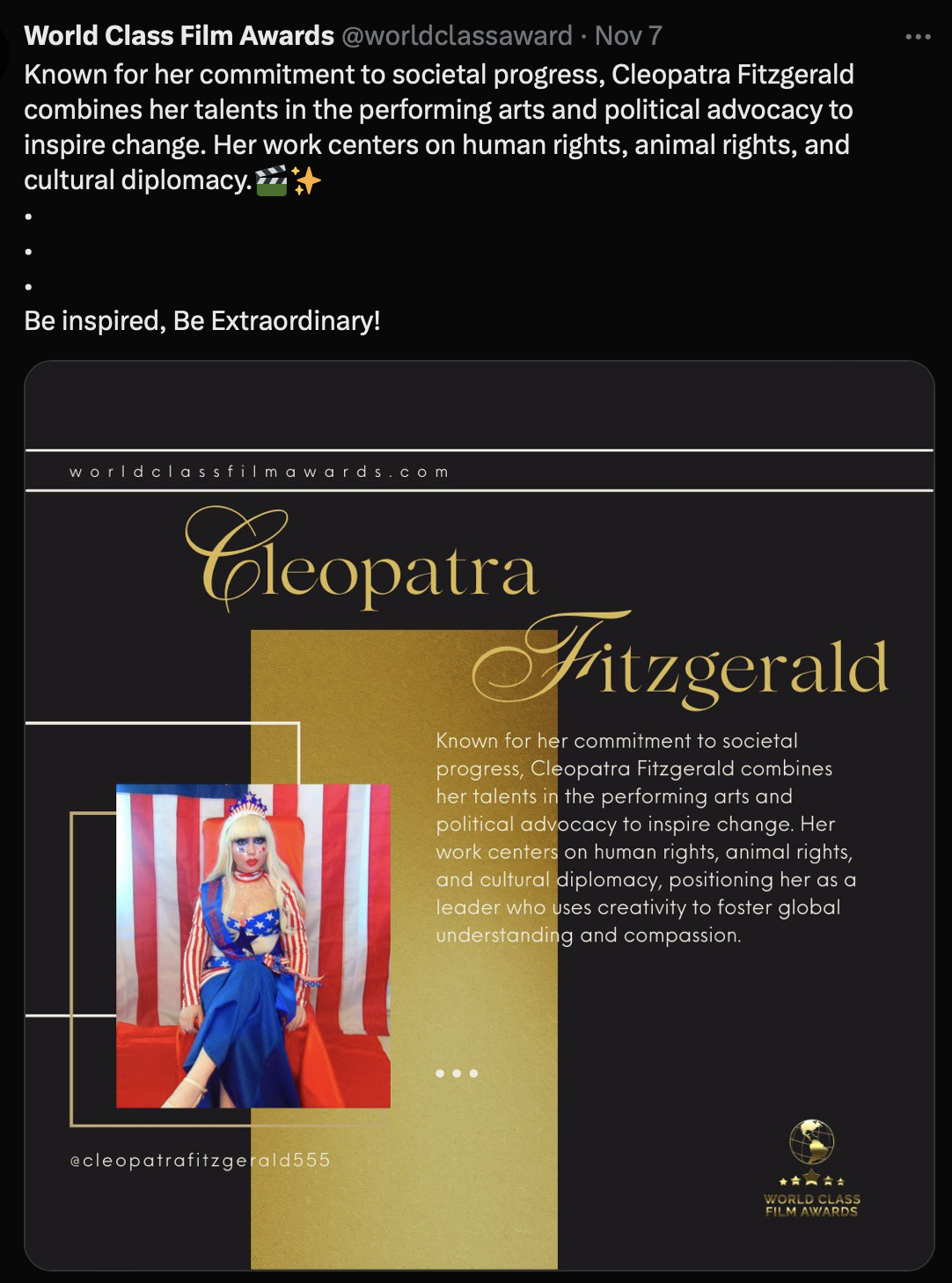
By Cleopatra Fitzgerald

Thursday, March 27, 2025

Colors of Nature, Human Rights Testimony


Millions of persons suffer from colorblindness including politicians  and persons in various industries. For instance, Bill Clinton, Prince William, Bill Gates, Robert Redford, Tiger Woods and among these many others.

Persons have dealt with it and achieved whereas others have acquired adverse effects that affect their lives negatively due to old age crisis elderly could have sensory with clothing, makeup, accessories, styles, colors, or feeling insecure -because of their vision issues or malice or other conditions they try to place excuses to those who do not suffer. For example, some teachers who were elderly in my school got angry when kids wrote in gel colored pens that are widely available for artists, adults and children to use globally. Then, others with vision problems would start criticizing the colors found in nature and telling the wearers they cannot see. Colors are for everyone, they do not discriminate and a saying goes "not everything is in black and white." 

Hence, illogical  trying to inculpate someone of crimes not committed and shifting blame because of colors is an illegal tactic, crimes against humanity, hate crime. It is like stripping persons of their clothing during war time, humiliation, shaving heads, raping, starvation, depriving someone of living, that is known as genocide, war crime, tyrannical.

Categorizing someone of a race or feature they do not have is racial mis-categorization, mis-classification, leading to hate crime, bias, discrimination, stereotypes, racial hatred to degrade.

Telling someone to "marry your own kind" is discriminatory, harmful, divisive exhibiting racial superiority when everyone is mixed. Persons have the right to marry or not, have kids or not, have a social life with whomever they want as stated in " US 14th Amendment, International Covenant on Civil and Political Rights (ICCPR) Article 23, Anti-Discrimination Laws, Universal Declaration of Human Rights (UDHR) Article 16th, Freedom of Association 1st Amendment, Reproductive Rights, Freedom of Sexuality laws, Sexual Autonomy and Privacy laws, Article 20th of Universal Declaration of Human Rights, and more globally. 

A person who is not seeking employment or is self-employed is not homeless and due to health prevention the doctor said there is a choice to work or not to work, to eat or drink what is needed to be in good health,  to wear any colors, red, designs and especially the flag of the USA.

Corruption,crimes,money scams,fraud are also committed by persons who are politicians, white collared criminals,international leaders,etc that are dishonest. In past eras & in recent news they are held accountable through lawsuits,public scandals,heavy prison sentences, lost of public trust for their acts of financial crimes, accepting bribes, public funds/charity for personal benefit, illicit deals, abuse of power, coercion, using royal influence for financial gain, influence peddling, illegal gifts, money laundering, embezzlement, kickbacks, extortion, threatening, menacing with death threats, creating disasters & crimes to blame the innocent, & list goes on.

Any attempt against true citizens of US or others, to infrastructure will be given with anticipation to the authorities.

"10 Signs of Generational Envy"  https://www.psychologytoday.com/us/blog/beyond-cultural-competence/202107/10-signs-of-generational-envy

Older persons get angry when they cannot see colors:

https://www.google.com/search?

q=older+persons+get+angry+when+they+cannot+see+colors&sca_esv=1fe3e7095f1a8e23&rlz=1C5CHFA_enUS902US902&sxsrf=AHTn8zq035txMCe92feyFvBFPJq7C3T1-g%3A1743093470498&ei=3n7lZ5SVHr_X5NoP_YWJgAg&ved=0ahUKEwiU_PmY2aqMAxW_K1kFHf1CAoAQ4dUDCBA&uact=5&oq=older+persons+get+angry+when+they+cannot+see+colors&gs_lp=Egxnd3Mtd2l6LXNlcnAiM29sZGVyIHBlcnNvbnMgZ2V0IGFuZ3J5IHdoZW4gdGhleSBjYW5ub3Qgc2VlIGNvbG9yczIIEAAYogQYiQUyCBAAGIAEGKIEMgUQABjvBTIIEAAYgAQYogQyCBAAGIAEGKIESIQLUPcCWPcCcAF4AZABAJgBYaABYaoBATG4AQPIAQD4AQGYAgKgAnHCAgoQABiwAxjWBBhHmAMAiAYBkAYIkgcDMS4xoAeuBLIHAzAuMbgHZg&sclient=gws-wiz-serp

Sudden personality changes in elderly: 

https://www.google.com/search?q=sudden+personality+changes+in+elderly&sca_esv=1fe3e7095f1a8e23&rlz=1C5CHFA_enUS902US902&sxsrf=AHTn8zrqNaMrgeu3vbdhDDm7GQNILhMvtA%3A1743093482493&ei=6n7lZ7nvHYi2ptQPwr7Z-QM&ved=0ahUKEwi5jNae2aqMAxUIm4kEHUJfNj8Q4dUDCBA&uact=5&oq=sudden+personality+changes+in+elderly&gs_lp=Egxnd3Mtd2l6LXNlcnAiJXN1ZGRlbiBwZXJzb25hbGl0eSBjaGFuZ2VzIGluIGVsZGVybHkyBRAAGIAEMgYQABgWGB4yBhAAGBYYHjIGEAAYFhgeMgsQABiABBiGAxiKBTIIEAAYgAQYogQyCBAAGKIEGIkFSL9lUIgVWIpjcAF4AZABAZgBjgKgAaYZqgEGMzEuNS4xuAEDyAEA-AEBmAIloALOGKgCEMICBxAjGCcY6gLCAg0QIxjwBRgnGMkCGOoCwgIUEAAYgAQY4wQYtAIY6QQY6gLYAQHCAhAQABgDGLQCGOoCGI8B2AEBwgIQEC4YAxi0AhjqAhiPAdgBAcICChAjGIAEGCcYigXCAgsQABiABBiRAhiKBcICERAuGIAEGLEDGIMBGNQCGIoFwgIREC4YgAQYsQMY0QMYgwEYxwHCAgsQLhiABBjRAxjHAcICBBAjGCfCAgUQLhiABMICDhAuGIAEGLEDGNEDGMcBwgIIEAAYgAQYsQPCAgoQLhiABBhDGIoFwgIKEAAYgAQYQxiKBcICCxAAGIAEGLEDGIMBwgINEAAYgAQYsQMYQxiKBcICCBAuGIAEGLEDwgILEAAYgAQYsQMYigXCAgsQLhiABBixAxiKBcICChAAGIAEGBQYhwKYAwjxBXmZcYd57OMQugYGCAEQARgBkgcEMjkuOKAH4MMCsgcEMjguOLgHxhg&sclient=gws-wiz-serp 


Cleopatra Fitzgerald

Wednesday, December 18, 2024

UNETHICAL

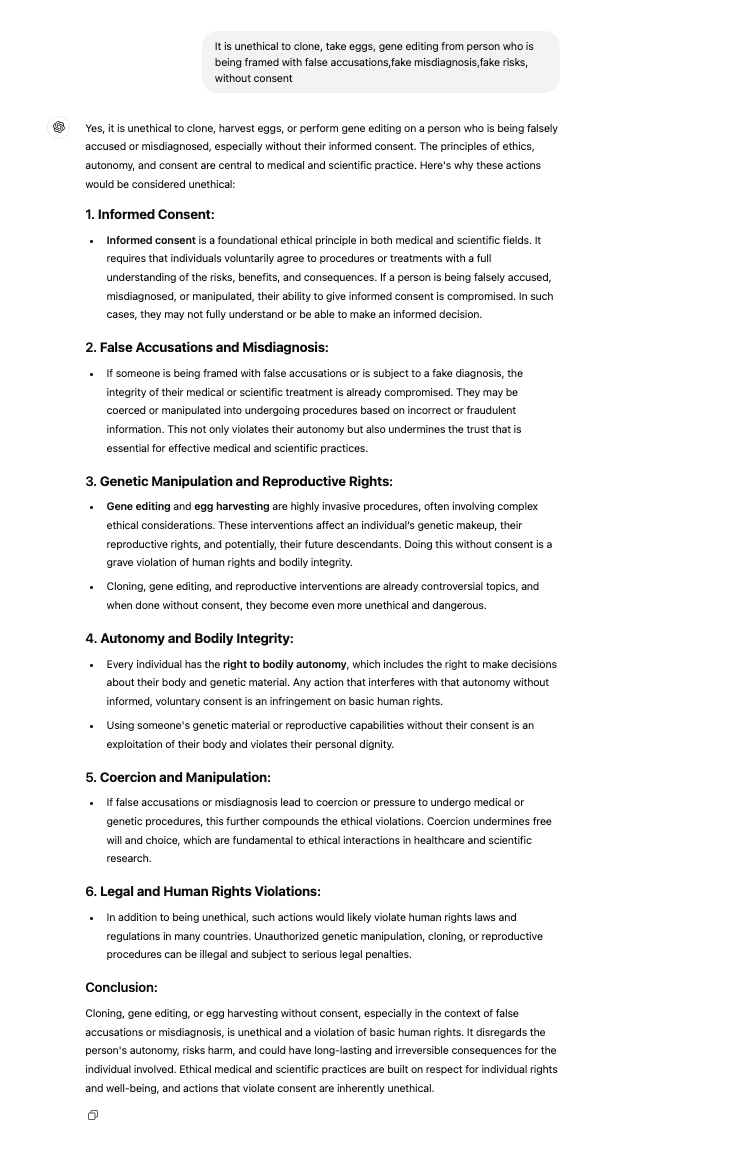
 It is illegal to frame someone trying to change their cultural, traditional,heritage,self-expression,artistic expression & career choices. I stated to ChatGPT "It is unethical to clone, take eggs, gene editing from person who is being framed with false accusation, fake misdiagnosis, fake risks, without consent." Then ChatGPT responded with these:  Please, click on page to see clearer


Human dignity should be respected especially the dead:

Saturday, November 23, 2024

Gender Based Violence & more. What will be done to address these public harms?

 Global economies falter when issues such as gender based violence, sexual violence, forced labor, war crimes, child marriage,FGM, discrimination against race, religion, ethnicity, culture, disability, sexual orientation, lifestyles, status, age, etc  -What will be done to address these public harms?

According to sources found by ChatGPT: “Women around the world experience various forms of abuse that can be institutionalized, systemic, or cultural in nature. These abuses are often deeply embedded within the structures of society, and they can be perpetrated or condoned by state authorities, laws, and cultural norms. Below are some of the ways women are abused by or within a country:

1. Gender-based Violence (GBV)

This includes physical, sexual, emotional, and psychological abuse. While gender-based violence is pervasive globally, it is often exacerbated or ignored by state systems.

  • Domestic Violence: In many countries, laws against domestic violence are either weak or poorly enforced. Abusers are often not prosecuted, and women may be left without legal recourse or protection.
  • Sexual Violence: Rape and sexual assault can be used as tools of oppression and control, often in conflict zones, but also within more stable societies. In some countries, laws may blame the victim (e.g., laws that require proof of resistance or focus on "modesty" as factors in sexual assault cases).
  • Honor Killings and Acid Attacks: In certain cultural or religious contexts, women may be murdered or maimed by family members for perceived breaches of honor, often with little to no legal consequences.

2. Legal and Political Inequality

In some countries, women’s legal rights are unequal to men’s, preventing them from fully participating in society or achieving social and economic independence.

  • Lack of Legal Protections: In many places, women have fewer rights to property, inheritance, and divorce. In some cases, marriage laws can be restrictive, and women may have little recourse in cases of forced marriage or marital rape.
  • Political Disenfranchisement: In certain countries, women may not have the right to vote, run for office, or participate in public life. Even where women do have the right to vote, political structures or systems may still marginalize them from decision-making processes.
  • Sharia Law and Religious Legal Systems: In countries where Sharia law is implemented, women’s rights can be severely restricted, especially in the areas of marriage, divorce, inheritance, and witness testimony. The interpretation of these laws can vary, but often women face discrimination in such legal systems.

3. Economic Disempowerment

Women often face systemic barriers that limit their economic opportunities and keep them dependent on male family members or husbands.

  • Pay Inequality: In many countries, women earn less than men for the same work. Pay gaps are often exacerbated for women of color, migrant women, and those in lower-income countries.
  • Limited Access to Employment: Societal norms and laws in certain countries prevent women from working outside the home or pursuing careers in particular fields, such as politics, science, or engineering.
  • Lack of Access to Financial Services: In many developing countries, women have limited access to credit, loans, and banking services, which makes it difficult to start businesses or invest in their futures.

4. Reproductive Rights and Health Discrimination

Many women’s rights violations are tied to their reproductive health and autonomy. In some countries, women’s access to contraception, abortion, and sexual health services is restricted, often due to religious, cultural, or political beliefs.

  • Restrictive Abortion Laws: In some countries, abortion is illegal or severely restricted, even in cases of rape, incest, or danger to the woman's health. This can force women to seek dangerous, illegal abortions or carry unwanted pregnancies to term.
  • Forced Sterilization: In some countries, marginalized groups of women, including indigenous women, women with disabilities, or women in prison, have been subjected to forced sterilization policies.
  • Limited Access to Maternal Health Care: In some regions, particularly in low-income countries, women have limited access to prenatal and postnatal care, leading to higher maternal mortality rates.

5. Cultural and Societal Norms

Women’s roles in society are often dictated by cultural norms that can be harmful and oppressive.

  • Child Marriage: In some countries, girls are forced into marriage at a young age, often to older men. This practice is rooted in cultural traditions and can have severe implications for girls' health, education, and future autonomy.
  • Female Genital Mutilation (FGM): In some countries, FGM is still practiced as a cultural tradition, despite it being widely recognized as a human rights violation. It is performed on young girls, often without their consent, and can lead to severe physical and psychological consequences.
  • Gender Roles and Expectations: In many societies, women are expected to perform specific roles as caregivers, homemakers, and mothers. This can limit their access to education, employment, and self-determination.

6. Conflict and Displacement

In war and conflict zones, women are disproportionately affected, facing violence, displacement, and exploitation.

  • Sexual Violence as a Weapon of War: In many conflicts, women and girls are targeted for sexual violence by armed groups. Rape, forced prostitution, and sexual slavery are used as deliberate tools of war, and perpetrators are rarely held accountable.
  • Displacement and Refugee Status: Women who flee war and persecution often face additional challenges as refugees or internally displaced persons (IDPs). They are vulnerable to sexual violence, trafficking, and exploitation by traffickers or even by the very institutions meant to protect them.

7. Discrimination and Harassment

In many societies, women face widespread discrimination and harassment, both in public and private spheres.

  • Sexual Harassment: In many countries, sexual harassment in the workplace, schools, and public spaces is rampant but rarely addressed by authorities. Women are often blamed or disbelieved when they report such incidents.
  • Public Discrimination: Women are often subjected to public scrutiny and judgment, particularly regarding their appearance, behavior, and choices. In some places, laws or social norms mandate a woman's dress and behavior, and violating these rules can result in violence or punishment.

8. State-Sanctioned Violence

In certain regimes, state authorities may directly perpetrate or condone violence against women as part of maintaining power or control.

  • Political Repression: Women who oppose authoritarian governments may be subjected to imprisonment, torture, or extrajudicial killings. In some countries, female activists, journalists, and opposition figures are specifically targeted for violence or harassment.
  • Repressive Laws and Regulations: Some countries have laws that specifically target women’s behavior, such as laws that criminalize "immoral" acts or enforce dress codes. These laws can lead to arrest, corporal punishment, or even execution in extreme cases.

Conclusion

The abuse of women by a country is often a complex intersection of legal, cultural, economic, and political factors that perpetuate inequality. Addressing these issues requires comprehensive efforts to reform laws, challenge harmful cultural norms, and ensure that women’s voices and rights are central to any discussions about justice, development, and peace. The empowerment of women—through education, legal reforms, and social change—is key to breaking the cycle of abuse and oppression that many women face worldwide.”


Types of Discrimination:

 Global economies falter when issues such as gender based violence, sexual violence, forced labor, war crimes, child marriage,FGM, discrimination against race,  religion, ethnicity, culture, disability, sexual orientation, lifestyles, status, age, etc  -What will be done to address these public harms?

In reference to ChatGPT: “Discrimination can manifest in many forms, and individuals can face unfair treatment based on a variety of factors, including age, race, lifestyle, disability, culture, and social or economic status. Here's a breakdown of how discrimination can occur in these areas:

   1. Age Discrimination:

Older Adults: They may be stereotyped as "out of touch," resistant to change, or less capable of learning new skills, which can lead to job discrimination, being passed over for promotions, or being excluded from social opportunities.

Younger People: On the other end, younger individuals may be dismissed as inexperienced, immature, or not taken seriously, especially in professional or leadership contexts.

   2. Racial Discrimination:

Racial Profiling: People may be unfairly treated based on their race, facing harsher scrutiny by law enforcement or being overlooked in hiring processes.

 3.Cultural Stereotyping: Members of certain racial or ethnic groups may be subjected to biases, where they are assumed to have certain behaviors, attitudes, or skills based solely on their race.

Inequality in Opportunities: Systemic racism often results in unequal access to education, healthcare, and housing, perpetuating disadvantages for people of color.

    4. Lifestyle Discrimination:

Sexual Orientation: LGBTQ+ individuals often face discrimination in both personal and professional settings, such as job rejections, workplace harassment, or being denied access to healthcare.

Gender Identity: Transgender individuals might experience harassment, misgendering, or exclusion from certain spaces or services, as well as barriers in accessing medical care and legal recognition.

    5. Disability Discrimination:

Physical or Mental Disabilities: People with disabilities may face physical and societal barriers that make it harder to access public spaces, jobs, or education.They might be assumed to be less competent, regardless of their actual abilities.

Stigma and Misunderstanding: There are often misconceptions about people with disabilities, where they are seen as "inspirational" in a way that may feel patronizing, or where their needs are overlooked in society.

    6. Cultural Discrimination:

Language Barriers: People from different cultural backgrounds may face exclusion or bias because they speak a different language or have an accent. This can affect job opportunities, social integration, and even access to services.

Religious Discrimination: People may be discriminated against for practicing a particular religion, whether through exclusion, ridicule, or restrictions placed on their religious practices.

Cultural Norms: Discrimination can also stem from cultural differences in dress, behavior, or social practices, where individuals are judged negatively for not adhering to dominant cultural standards.

    7. Social or Economic Status Discrimination:

Classism: Individuals from lower socio-economic backgrounds may face prejudice based on their perceived "social class." They may be stereotyped as lazy, uneducated, or incapable, regardless of their circumstances.

Homelessness: People who are homeless may face significant discrimination, such as being refused service in businesses, stigmatized by society, or overlooked for employment opportunities.

Income Inequality: Those with lower income may face barriers to accessing healthcare, education, or even social acceptance, reinforcing a cycle of disadvantage.

    8. Discrimination Based on Immigration Status:

Undocumented Immigrants: These individuals often face the threat of deportation, limited access to services, and societal exclusion. They may also be subject to prejudice, stereotypes, and exploitation due to their vulnerable legal status.

     9.Status Discrimination in Professional Environments:

Employment Discrimination: People may be judged or treated unfairly based on their job status, such as being a temporary worker, part-time employee, or holding a lower-ranking position.

Education: Students from underprivileged backgrounds or those with less prestigious academic qualifications may face bias from their peers or teachers, limiting their educational opportunities and future prospects.


How Discrimination Affects People:

        Discrimination can have profound psychological, social, and economic effects on individuals. It can lead to feelings of isolation, lowered self-esteem, and stress, as well          

        as limit access to opportunities and resources, reinforcing cycles of inequality. Legal protections exist in many countries to combat discrimination (e.g., through anti-               

        discrimination laws, affirmative action policies), but challenges remain in addressing deeply ingrained societal biases.” 


Monday, November 11, 2024

Authentic Armed Forces Letters

 Authentic Armed Forces letters to my mother from the war, my mother read the letters at loud to my father and I  of the Armed Forces who were at war and they responded through correspondence with her. My father sent the letters my mother wrote to them. Due to privacy some items are covered. Please, click on each of the letters for easier viewing. 

Happy Veterans Day to all those who participated & to their families, friends, colleagues and to all U.S. citizens and others...


Honoring Veterans Day.


Monday, September 2, 2024

End of Year Autograph yearbook signed by directors, teachers,students from high schools & elementary schools